



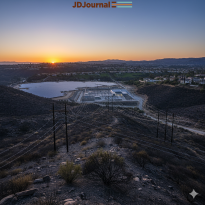
In a major development for California’s utility and energy sector, Southern California Edison (SCE) and several other intervening parties have agreed to a $2 billion settlement aimed at recovering a significant portion of the utility’s losses tied to a series of devastating wildfires and mudslides that struck California between 2017 and 2018. The settlement, which still requires approval from the California Public Utilities Commission (CPUC), represents a key step in SCE’s efforts to stabilize its finances while navigating the growing threat of climate-related disasters.
A Closer Look at the Settlement
The $2 billion recovery is part of a broader set of wildfire-related losses totaling nearly $5.6 billion for SCE and its parent company, Edison International. According to company filings, about $1.6 billion of the settlement will cover uninsured losses, meaning damages that were not reimbursed through SCE’s insurance coverage. The remaining $400 million will go toward reimbursing legal and related costs incurred through May 31, 2025.
The deal specifically covers multiple catastrophic events, including the 2018 Woolsey Fire, one of Southern California’s most destructive wildfires, which burned nearly 97,000 acres, destroyed approximately 1,643 structures, damaged nearly 300 more, forced 295,000 residents to evacuate, and tragically caused three deaths.
It also includes recovery for damages caused by the 2017 Thomas and Koenigstein Fires, as well as the 2018 Montecito Mudslides that followed heavy rainfall in fire-scorched areas. Collectively referred to as “TKM” events, these disasters caused widespread infrastructure damage, lawsuits, and claims that have weighed heavily on the utility’s balance sheet.
CPUC Approval Will Be the Deciding Factor
The settlement is not yet final — it must be reviewed and approved by the California Public Utilities Commission. If approved, the CPUC would authorize SCE to recover the funds through mechanisms that typically involve cost-sharing with ratepayers. The settlement also provides for the recovery of 35% of certain costs incurred after May 31, 2025, as well as about $71 million in restoration expenses, representing 85% of the total restoration costs tied to these disasters.

Edison International has stated that it expects to begin receiving the proceeds by late 2026, assuming regulatory approval moves forward on schedule.
Balancing Costs, Accountability, and Risk
California’s utilities have been under intense scrutiny for their role in starting some of the state’s worst wildfires. Electrical equipment operated by utilities such as Pacific Gas & Electric (PG&E) and SCE has been implicated in multiple fire investigations. Lawsuits have accused utilities of failing to maintain equipment or adequately manage vegetation near power lines — alleged failures that can turn a single spark into a catastrophic blaze under dry, windy conditions.
This settlement helps SCE recover some of its costs but does not absolve it from potential future liabilities. In fact, SCE continues to face claims related to more recent fires, including the Eaton Fire in Los Angeles. Meanwhile, the company is expected to invest billions into wildfire mitigation strategies such as undergrounding power lines, installing advanced weather monitoring systems, and hardening infrastructure to reduce fire risk.
Financial Impact and Investor Perspective
From a financial standpoint, this agreement allows Edison International to reduce some of the uncertainty hanging over its books. When combined with previously authorized recoveries for TKM events, Edison estimates that it will recover about 43% of its total losses tied to these disasters — a significant portion, though still less than half.
For investors, this provides greater clarity and may stabilize confidence in SCE’s long-term financial health. Utilities operating in California are required to maintain access to capital markets to fund operations and safety improvements. Without regulatory cost recovery, wildfire liabilities could become so burdensome that utilities risk insolvency — a problem that previously pushed PG&E into bankruptcy in 2019.
Implications for Ratepayers and Policy
Ratepayers may ultimately bear some of the financial burden through increases in electricity rates, though the exact impact will depend on how the CPUC structures the recovery mechanism. Consumer advocates often argue against allowing utilities to pass too much of the cost onto customers, contending that shareholders should bear more of the financial responsibility for equipment-related disasters.
Nevertheless, regulators also face pressure to keep utilities financially solvent to ensure ongoing infrastructure investment and prevent future disasters. This settlement strikes a balance between these competing priorities, allowing SCE to recover a meaningful portion of its costs without shifting the entire burden onto ratepayers.
A Sign of Things to Come
California’s wildfire liability framework continues to evolve as climate change increases the frequency and severity of fire events. Agreements like this one could set a precedent for how future wildfire costs are shared among utilities, insurers, regulators, and the public.
For Edison International, this is a step toward financial recovery — but also a reminder that its work is far from over. The utility will remain under close scrutiny as it implements wildfire prevention measures and navigates future claims.
⚖️ Stay Ahead of Energy and Environmental Law Trends
As utilities face mounting wildfire liabilities and regulatory scrutiny, legal professionals with expertise in environmental law, insurance litigation, and regulatory compliance are in high demand. If you’re an attorney or law student interested in shaping California’s energy future—or representing clients in wildfire and infrastructure-related litigation—now is the time to explore opportunities in this fast-growing field.
Visit LawCrossing today to find exclusive job listings in energy law, regulatory affairs, insurance recovery, and climate change litigation. Don’t just read about landmark settlements—be part of the teams shaping them.


