


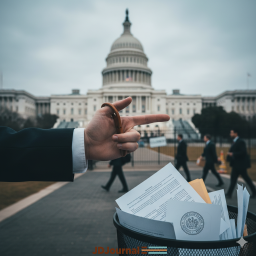

President Donald Trump announced plans to reduce federal spending by cutting government programs and jobs as the United States enters another week of a partial government shutdown. The President said his administration will unveil details on the proposed cuts “within the next four or five days,” signaling what could be a major restructuring of federal operations if the shutdown continues.
The shutdown, now stretching into its second week, began after Congress failed to agree on a budget extension, leaving thousands of federal employees furloughed and many essential services disrupted. The impasse reflects deep political divisions over government spending priorities, with both the White House and Congress blaming each other for the deadlock.
Trump’s Push for Leaner Government
Speaking from the White House, Trump emphasized that the cuts are part of a broader effort to streamline government operations and reduce what he characterized as “wasteful programs” that no longer serve the American people effectively. He suggested that certain agencies and departments could face staffing reductions as part of the administration’s response to fiscal challenges.
“We’re looking at programs that frankly should have been cut a long time ago,” Trump said. “There’s a lot of waste in Washington, and it’s time we make government more efficient and accountable.”
While Trump did not provide specific details on which programs or positions would be affected, he indicated that the administration’s plan would be comprehensive, targeting areas with overlapping or outdated functions. The statement aligns with his long-standing campaign message to downsize the federal bureaucracy and shift more responsibility to state and local governments.

Economic and Political Repercussions
The President’s remarks come amid growing concern over the economic consequences of the shutdown. Federal employees have already begun missing paychecks, government contractors face uncertainty, and public services—from national parks to regulatory agencies—are feeling the strain. Analysts warn that a prolonged shutdown could have ripple effects across the economy, potentially slowing consumer spending and delaying key economic data releases.
Economists also note that the proposed job cuts could further dampen federal employment, which has already seen reductions in several departments under the Trump administration. Critics argue that trimming the federal workforce during a shutdown could exacerbate disruptions to public services and delay recovery efforts once the government reopens.
Lawmakers from both parties expressed skepticism about Trump’s proposed cuts. Democrats have argued that reducing federal jobs during a crisis sends the wrong message to workers who have been sidelined by the shutdown. Meanwhile, some Republicans support the move as a necessary step toward fiscal discipline but urge the administration to ensure that essential services remain operational.
Uncertainty for Federal Workers
For federal employees, the President’s announcement adds to an already uncertain situation. Many workers are unsure whether they will return to their jobs or face layoffs once the shutdown ends. Labor unions representing federal workers have condemned the proposal, calling it an “attack on public servants who keep the nation running.”
Tony Reardon, president of the National Treasury Employees Union, stated that the focus should be on reopening the government, not cutting jobs. “Federal employees have been caught in the middle of a political standoff,” Reardon said. “Now they’re being told that even when the government reopens, their jobs may be on the line.”
A Broader Political Strategy
Analysts suggest that Trump’s announcement may also serve a political purpose—reinforcing his image as a reformer determined to shake up Washington. By linking the shutdown to his long-standing goal of shrinking the federal government, Trump is appealing to his conservative base while applying pressure on Congress to reach a funding agreement on his terms.
Political strategists note that this tactic has been used in past budget standoffs to shift public attention from legislative gridlock to executive action. However, it remains unclear whether this approach will yield results, as opposition from both Congress and public sector unions is expected to intensify.
Looking Ahead
The White House has not released an official list of the programs or departments facing cuts, but insiders suggest that non-defense discretionary spending may be the primary focus. Trump has consistently emphasized his support for maintaining defense spending levels while reducing expenditures in other areas, including regulatory oversight and social programs.
As the administration prepares to reveal details of its cost-cutting plan, attention is turning to the potential legal and administrative hurdles such changes could face. Federal workforce reductions and program eliminations typically require Congressional approval, making it likely that any sweeping changes would encounter significant resistance.
Despite the uncertainty, Trump remains confident that his approach will lead to a “more efficient and accountable government.” “We’re doing what should have been done decades ago,” he said. “We will make America’s government leaner, smarter, and more focused on serving the people—not the bureaucracy.”
Implications for the Legal and Policy Landscape
The President’s comments carry significant implications for federal law, employment policies, and administrative procedures. Large-scale cuts to government programs often trigger complex legal processes, including labor negotiations, contractual obligations, and potential litigation from affected employees or agencies. Legal experts note that any abrupt reductions in federal staffing or funding could invite challenges on procedural or constitutional grounds.
The ongoing shutdown itself already poses legal questions about funding priorities, furlough procedures, and compliance with labor laws governing federal employment. As the situation evolves, attorneys in both the public and private sectors will be closely monitoring how these developments impact federal contract law, employment rights, and administrative rulemaking.
Looking for new opportunities amid shifting public-sector dynamics?
🔎 Explore thousands of verified legal positions at LawCrossing — the most comprehensive legal job site for attorneys and legal professionals.


