


A newly released BigLaw Partner Compensation Report sheds light on one of the most closely watched issues in the legal industry: how much partners earn, how those earnings differ between equity and non-equity roles, and which practice areas are delivering the best return on investment for firms.
The report provides an in-depth look at the financial dynamics shaping BigLaw, offering data-driven insights that are crucial for law firm leaders, lateral partners, and aspiring attorneys looking to understand the market.
Learn more from this report: BigLaw Partner Compensation Report Equity vs. Non-Equity Earnings & ROI by Practice Area

Equity vs. Non-Equity Partners: The Compensation Gap
One of the key findings is the significant disparity between equity and non-equity partner earnings. Equity partners—those with ownership stakes in their firms—continue to earn substantially more than their non-equity counterparts. While equity partners typically share directly in firm profits, non-equity partners often earn fixed salaries or bonuses that do not fluctuate with firm performance.
The report highlights that the average equity partner compensation continues to trend upward, reflecting strong profitability at the top firms. In contrast, non-equity partner pay remains more modest, though often more predictable.

ROI by Practice Area
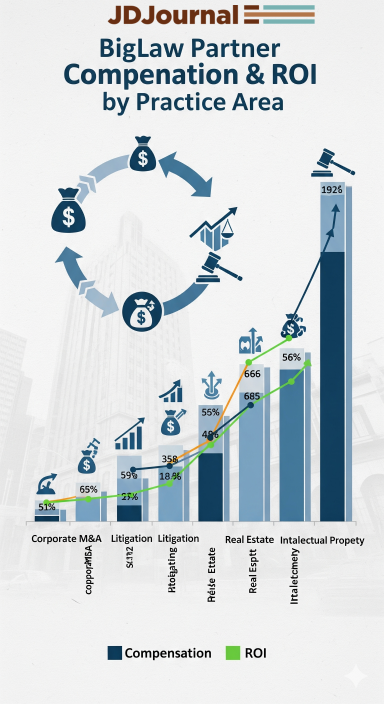
Another critical aspect of the report is the return on investment (ROI) by practice area, a metric that shows which legal specialties are driving firm profitability. High-demand areas such as M&A, private equity, and complex litigation rank among the most lucrative, producing the highest per-partner revenue.
Meanwhile, practice groups like labor and employment, real estate, and regulatory work deliver lower—but often steadier—returns. This data is increasingly important for law firm management teams when allocating resources and for partners evaluating where to focus their practices.
Lateral Hiring & Market Competition
The findings also have implications for lateral partner hiring, where compensation packages are heavily influenced by expected ROI. Firms are aggressively pursuing high-performing partners in transactional practices, while also balancing long-term sustainability and culture.
BCG’s report suggests that firms are becoming more strategic about who they bring in as equity partners, with many firms tightening criteria for buy-in or introducing tiered equity structures to align compensation more closely with profitability.
Why This Matters
For current and aspiring partners, these insights are vital. Understanding compensation trends, profitability by practice area, and the changing dynamics of equity partnership can inform career decisions and negotiations.
The report ultimately paints a clear picture: BigLaw compensation is evolving, and firms are seeking ways to reward performance while protecting margins in a competitive market.
Learn more from this report: BigLaw Partner Compensation Report Equity vs. Non-Equity Earnings & ROI by Practice Area


