


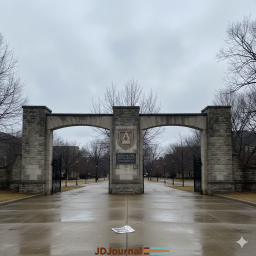

The University of Arkansas at Little Rock (UALR) has dismissed law professor Felicia Branch after she made social media posts regarding the death of conservative commentator Charlie Kirk, igniting a public backlash and sparking a debate over academic freedom, professional ethics, and political expression within higher education.
Branch, who joined the William H. Bowen School of Law in July, served as both a faculty member and director of the Low-Income Taxpayer Clinic, a program offering legal assistance to underserved communities. Her termination followed a two-week suspension and internal review after several state officials and members of the public called for her removal.
The Posts That Sparked Controversy
The controversy began shortly after Kirk’s death, when Branch made posts on Facebook commenting on the reactions surrounding his passing. According to reports, she criticized those publicly mourning Kirk, allegedly comparing them to Ku Klux Klan members and suggesting that celebrating the death of “an evil person… no longer on this earth causing immense suffering” should not be condemned.
The posts quickly drew widespread attention online and from local lawmakers, several of whom urged UALR to take disciplinary action. The situation highlighted growing tensions in academia around professors’ use of personal social media accounts, particularly when commentary intersects with politically sensitive or emotionally charged topics.
University Response and Investigation
UALR placed Branch on paid administrative leave on September 16, citing concerns about the potential impact of her comments on the law school’s environment. In a letter dated October 13, Chancellor Christina Drale officially notified Branch of her termination “for cause.”

According to the termination letter, Branch’s social media activity “caused a serious disruption to the efficient operation” of the law school and constituted a “serious violation of professional standards.” The university stated that her conduct had compromised “the trust and confidence of students, faculty, and the public,” even though she maintained that her posts were made in a private capacity and not as a representative of the university.
The letter further noted that although Branch’s posts garnered limited engagement online, the repercussions within the institution were substantial. “Your actions created an environment where students and colleagues expressed concerns about your professionalism and impartiality, which are essential qualities for a member of the law faculty,” Drale wrote.
Branch has not publicly commented on her dismissal.
Political Pressure and Broader Fallout
The decision to terminate Branch came amid growing political scrutiny. Several Arkansas lawmakers publicly called for her firing, arguing that her comments were inconsistent with the ethical standards expected of university faculty. The controversy mirrors similar incidents across the country in which professors have faced backlash—and, in some cases, termination—over online statements related to high-profile political figures.
According to the American Association of University Professors (AAUP), more than 50 professors and instructors nationwide have been disciplined or dismissed in connection with comments surrounding Charlie Kirk’s death. The organization has expressed concern about what it describes as an erosion of academic freedom and a chilling effect on scholars’ willingness to engage in public discourse.
UALR, however, maintains that its actions were based on professional conduct and institutional integrity—not political influence. “This decision was made to protect the learning environment and the reputation of the university,” the school said in a statement. “Faculty members are expected to uphold the highest standards of professionalism both inside and outside the classroom.”
Academic Freedom vs. Institutional Reputation
Branch’s firing raises significant questions about the balance between academic freedom and institutional responsibility. Faculty members at public universities do enjoy protections under the First Amendment, but courts have consistently held that these rights can be limited if speech materially disrupts university operations or undermines public trust in the institution.
Legal experts note that cases like Branch’s test the boundaries of those protections. “There’s a clear tension between personal expression and the perception of bias or unprofessional conduct, especially in professional schools like law,” said one higher education attorney. “Universities are increasingly navigating this gray area, particularly when public reaction becomes intense.”
Impact on the Legal Education Community
The legal academic community has been paying close attention to the case, as it highlights how quickly online commentary can lead to real-world professional consequences. Law professors are often held to especially high standards due to their role in shaping future members of the legal profession.
The Bowen School of Law emphasized its commitment to maintaining an inclusive and respectful learning environment. “Our mission is to prepare students for ethical practice and public service,” a spokesperson said. “We take seriously any behavior that may impede that mission.”
A National Debate on Speech and Accountability
Branch’s dismissal adds to a growing national debate over free speech, cancel culture, and institutional accountability in higher education. While supporters of her termination argue that educators must be mindful of how their public statements reflect on their institutions, critics say that punishing speech made in a personal capacity undermines the principles of open discourse and academic inquiry.
The controversy underscores the challenges universities face as they seek to protect academic freedom while responding to external pressures from political figures, donors, and the public. It also demonstrates how quickly personal remarks—particularly on social media—can escalate into high-stakes employment decisions.
As universities continue to grapple with these issues, Branch’s case may serve as a cautionary tale for faculty nationwide about the blurred lines between private expression and professional responsibility.
Looking for a Law Career That Aligns With Your Values?
Stories like this highlight how complex and high-stakes the legal world can be—especially for those navigating academia, ethics, and professional identity. Whether you’re seeking a new opportunity in education law, compliance, or litigation, LawCrossing offers access to thousands of verified legal jobs directly from employers.
Explore your next legal career move today at LawCrossing.com — the nation’s most comprehensive legal job board.


