


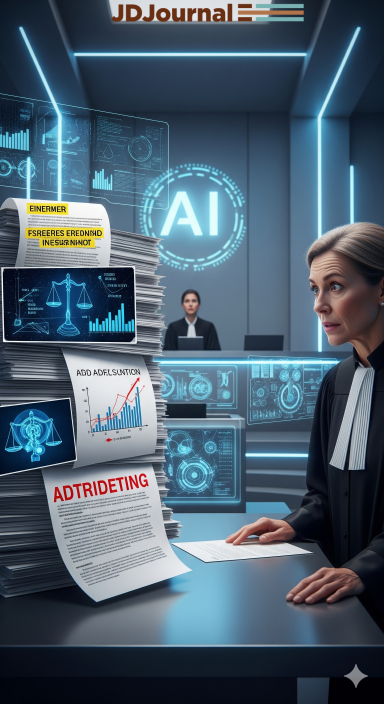

As artificial intelligence tools like ChatGPT become more widely used in legal work, judges around the U.S. are responding sternly to mistakes caused by overreliance or insufficient oversight. Errors such as fabricated case citations, misquoted sources, and other “hallucinations” generated by AI are no longer rare; their growing frequency has spurred courts to adopt stronger corrective measures beyond just monetary fines.
A Recent Case in Nevada: More than Just a Fine
In Washoe County, Nevada, District Judge David Hardy addressed a glaring example of AI misuse. Two attorneys from Cozen O’Connor submitted a filing in a civil case that included at least 14 citations that appeared to be entirely fictitious, along with other misrepresentations. The documents had been prepared with assistance from ChatGPT, and what was filed was reportedly an early draft that had not been properly checked.
Rather than simply meting out fines, Judge Hardy gave the attorneys a stark choice: they could either pay $2,500 each, face removal from the case, and be referred to the state bar—or they could write explanatory letters to their law school deans and bar officials, take responsibility, and speak publicly on AI ethics. The associate involved was later terminated by the firm.
Cozen O’Connor emphasized that it has a strict internal AI policy: no use of publicly available AI tools in client work, training for its attorneys on technology, and a requirement that all work be verified. Despite these internal rules, this incident shows how even law firms with strong AI policies are still vulnerable to AI-induced errors.
Evolving Judicial Responses: Beyond Fines
Judges across various jurisdictions are increasingly factoring in other forms of accountability to deter the misuse of AI in legal filings.

- Disqualification and broader disclosure: In Alabama, U.S. District Judge Anna Manasco disqualified three attorneys from law firm Butler Snow in a case after they submitted pleadings containing false or AI-fabricated legal citations. The judge didn’t stop at removing them — her order required the attorneys to share the decision not only with the parties and opposing counsel in that case, but with judges and colleagues in all their pending cases.
- Public reprimands and education obligations: Judges are imposing obligations beyond monetary penalties, such as having attorneys inform clients or other judges about their missteps, publicly explaining what happened, and engaging in speaking or training to raise awareness of ethical issues tied to AI use.
These approaches are rooted in a concern that fines alone may no longer be sufficient — not only because errors involving AI are becoming more common, but because the legal profession must uphold trust, accuracy, and ethical responsibility in filings. Some courts believe that scaling transparency and educational consequences may have a stronger deterrent effect.
AI Hallucinations: What They Are, and Why They Matter
The term “hallucinations” refers to when AI tools generate information that is false or not based in fact — for example, quoting a court decision that does not exist or misrepresenting what a case said. Legal filings with such errors pose serious risks: they mislead courts, waste judicial resources, undermine the integrity of legal proceedings, and in some cases, may constitute professional misconduct.
Professional conduct rules in all U.S. jurisdictions require attorneys to verify their court filings, whatever the source. Even an inadvertent misstatement, if based on AI output, can lead to discipline. Judges and legal ethicists are warning that reliance on AI without sufficient fact-checking is a recipe for ethical lapses.
What This Means for Lawyers, Law Firms & Courts
- Rigorous verification protocols: Lawyers must ensure any work involving AI is carefully fact-checked. Drafts should be reviewed, citations verified via reliable legal research tools, and quoted material confirmed. Internal firm policies are increasingly essential.
- Training & literacy: There is growing demand for legal professionals to develop more fluency with AI tools— not just how to use them, but how to recognize their limits. Understanding when AI might produce “hallucinations” is becoming part of what “competent representation” looks like.
- Transparency & disclosure: Incidents involving AI errors are likely to result in more open disclosure to courts, opposing parties, clients, and sometimes the public. Awareness of these disclosures can serve as a deterrent.
- Judicial innovations: The courts’ toolbox is expanding. Rather than relying only on fines or sanctions, judges are deploying measures intended to educate, reform practice, and protect the integrity of the legal system.
Bottom Line
The legal landscape is adjusting quickly. As AI becomes more prevalent in drafting, research, and argumentation, the risk of error grows—and so does judicial intolerance for unreliability. Judges are signaling that compliance with professional responsibility norms must include careful oversight of AI-derived content. For attorneys and law firms, the message is clear: employ AI with caution, verify everything, and be prepared for enhanced accountability.
Stay Ahead of the AI Curve in Your Legal Career
As courts tighten oversight on AI-related errors, lawyers who stay informed and adapt will have the edge. Don’t let emerging technology catch you off guard—explore career opportunities with firms that invest in training, compliance, and cutting-edge legal tools.
🔎 Visit LawCrossing today to find thousands of exclusive legal jobs, including positions at forward-thinking firms that prioritize innovation and professional development.


