


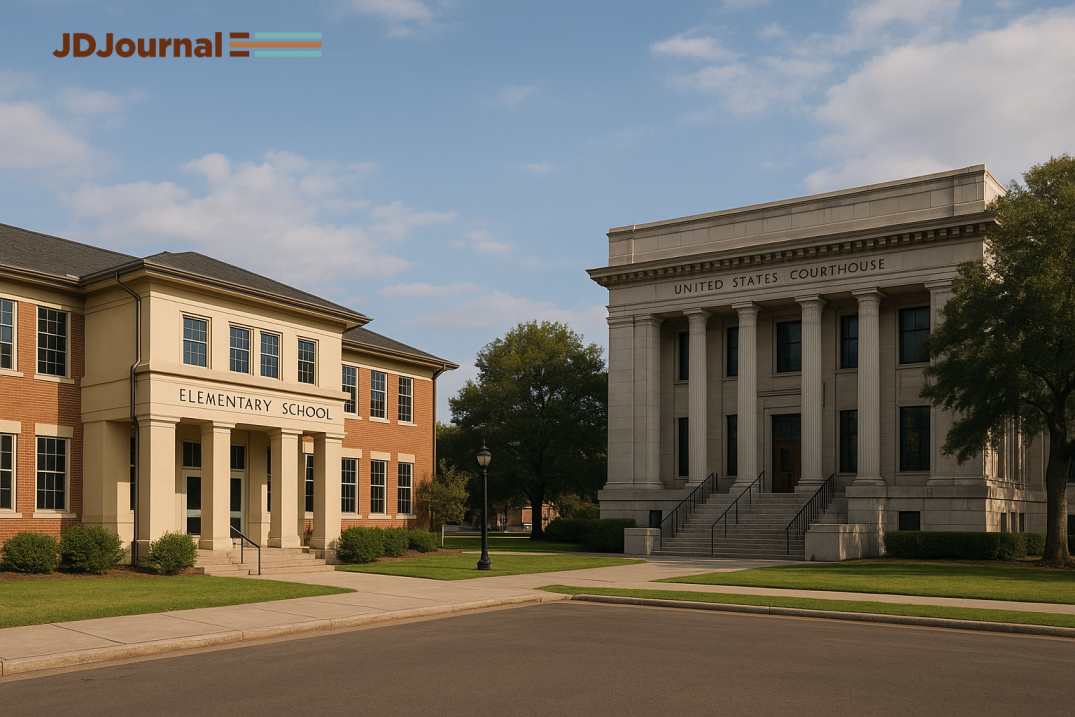
A federal judge has ordered that a dozen public school districts in Texas must refuse compliance with a state law requiring the display of the Texas Ten Commandments, saying that the mandate violates the Constitution.
Background of the Texas Ten Commandments display order
The law at issue imposed a directive that public school classrooms in Texas post the Ten Commandments. Earlier this year, a federal judge found that requirement conflicted with the Establishment Clause of the U.S. Constitution.
On November 19, 2025, U.S. District Court Judge Orlando L. Garcia issued an injunction ordering the districts to remove or refrain from placing the mandated displays.
Legal reasoning behind the Texas Ten Commandments display order
The court held that the law amounted to government endorsement of a religious text. It concluded that mandating the display of the Ten Commandments in public‐school classrooms breaches the prohibition on laws “respecting an establishment of religion.”
In doing so, the judge cited precedent from a federal appeals court that blocked a similar mandate in Louisiana.
Implications of the Texas Ten Commandments display order
For the school districts named, the ruling means posters or other Ten Commandments displays must be removed from classrooms or never installed. Several districts including Conroe, Northwest, and Fort Worth indicated they will follow the order.
From a broader perspective, this marks a significant moment in the national debate over religious expression in public education. The ruling signals that laws forcing religious texts into government‐run schools are vulnerable to constitutional challenge.
What happens next under the Ten Commandments display order
The injunction will remain in effect while further litigation unfolds. The same appellate court had already blocked a similar law and will hear a challenge associated with the Texas law next year.
Meanwhile, the American Civil Liberties Union (ACLU) hailed the decision as a win for religious liberty, saying it underscores that public‐school students cannot be compelled into religious expression by the state.

Why the Ten Commandments display order matters
The decision illustrates how enforceable school laws are still bound by constitutional limit seven if enacted by state legislatures.
It also shows that public schools being asked to display overtly religious texts will likely face legal challenge.
Finally, by requiring districts to defy the state law, the ruling sets a precedent for district autonomy when constitutional rights are at stake.
Whether you’re an experienced attorney or a recent law graduate, LawCrossing offers unmatched access to competitive legal jobs nationwide.
See Related Articles:
•15 Top Law Schools: Best Program for Aspiring Lawyers
•Decode Law Schools Ranking
•Law School Profile


