


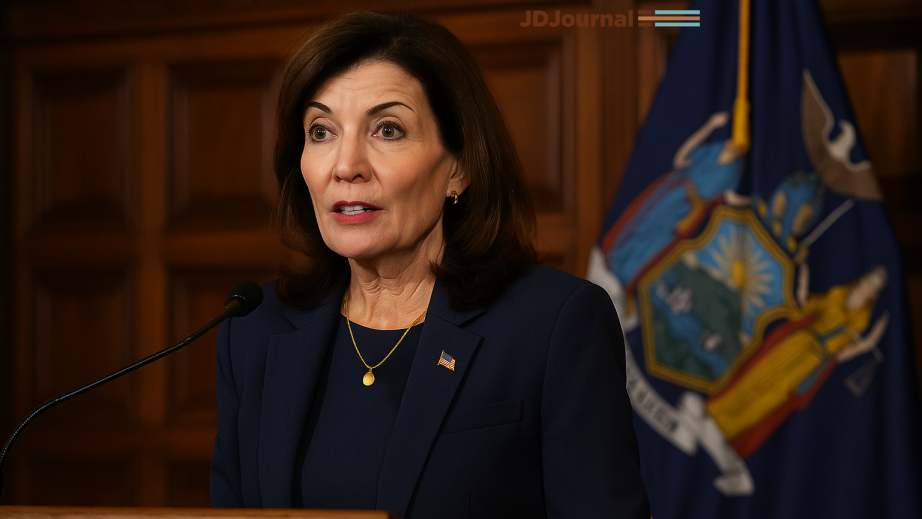
In a major NY Wrongful Death Update, New York Governor Kathy Hochul has once again vetoed the Grieving Families Act legislation aimed at overhauling the state’s 177-year-old wrongful death statute. The decision marks the fourth consecutive year the bill has passed both chambers of the Legislature with overwhelming bipartisan support, only to be rejected at the executive level.
The bill, widely supported by advocates, would expand the types of damages families may recover after a loved one is killed due to negligence, allowing compensation for grief, emotional anguish, and loss of companionship. New York currently allows families to recover only economic damages, meaning the legal value of a life is tied almost entirely to future earnings.
Advocates Condemn Decision: “A System That Treats Some Lives as Worthless”
The veto sparked immediate backlash from supporters who argue that New York’s law is one of the most outdated and discriminatory in the country.
“This fourth dismissal is an insulting reminder to victims that New York is prioritizing big business over families who have suffered unimaginable loss,” said Andrew Finkelstein, President of the New York State Trial Lawyers Association. He emphasized that New York remains an outlier, lagging behind 48 other states that allow courts to recognize emotional loss in wrongful death cases. Finkelstein criticized the current statute as functioning like a “free kill law” when victims are children, seniors, homemakers, students, or anyone without substantial income.
State Senator Brad Hoylman-Sigal (D-Manhattan), the bill’s sponsor, said the veto perpetuates a system in which families’ grief carries no legal meaning. “Our law creates a two-tier system where the lives of the wealthy are acknowledged while everyone else is treated as invisible,” he said. “New York must pass a modern and humane wrongful death law that recognizes the value of every life.”

Families Share Heartbreaking Accounts of Loss
Families directly impacted by wrongful death say the governor’s decision continues to deny them justice and accountability.
“We’ve asked to meet with the Governor and she has repeatedly turned us down,” said José Perez, whose partner Christine Fields died during childbirth due to medical negligence. “I can’t bring Christine back, but I have been fighting for justice. New York has failed to deliver either.”
Yanely Henriquez, whose daughter was killed by a ghost gun, said the veto devalues families based on wealth. “Reducing my daughter’s life to economic value adds indignity to a grief no parent should ever have to feel,” she said. “Why are the lives of rich New Yorkers valued, but ours are not?”
Bruce McIntyre, whose partner Amber Rose Isaac died shortly after childbirth, said the state has again failed families. “My son is growing up without the mother he yearns for,” he said. “The Grieving Families Act would give justice to my child and thousands of others. New York has let them all down for a fourth time.”
Experts Challenge Insurance Industry Warnings in Latest NY Wrongful Death Update
Opponents of the bill primarily hospital groups and insurance companies have claimed that expanding allowable damages would increase premiums and destabilize the medical system. However, experts and policymakers point to evidence undermining those predictions.
As reported by Politico, actuarial reports used by insurance interests have repeatedly been shown to contain inaccuracies. Furthermore, when Illinois updated its wrongful death law in 2007 to allow recovery for grief and emotional distress, malpractice insurance premiums stayed stable or even dropped, according to National Association of Insurance Commissioners (NAIC) data.
Supporters argue that warnings of economic fallout are exaggerated and that New York families already absorb tremendous financial and emotional costs when a loved one dies due to negligence costs that often far exceed any projected impact on insurers.
1. A NY Wrongful Death Update: A Law from 1847 Still Determines What a Life Is “Worth”
New York’s wrongful death statute, enacted in 1847, remains one of the nation’s most restrictive. Under the current law, families may recover only pecuniary losses, meaning:
- Emotional grief is excluded
- Loss of companionship is excluded
- Caregiving contributions are largely ignored
- Children, seniors, stay-at-home parents, and disabled individuals often receive minimal compensation
Advocates argue that the law entrenches racial, gender, and economic disparities. Communities historically underpaid in the labor market disproportionately receive smaller recoveries despite suffering the same degree of loss.
The Grieving Families Act would have expanded who may bring a claim, modernized the statute of limitations, and acknowledged the emotional devastation caused by preventable deaths.
A Crossroads for New York’s Civil Justice System: NY Wrongful Death Update
With the latest veto, supporters say New York is choosing to preserve an outdated system that prioritizes institutional interests over human suffering. The Legislature is expected to revisit the issue again next session, but advocates caution that each year of delay denies justice to thousands of families.
“This is not a partisan issue,” said one legislative aide familiar with the bill’s negotiations. “The question is whether New York will continue valuing lives based on earnings or finally join the rest of the country in recognizing the full impact of wrongful death.”
As public pressure mounts and families continue to demand reform, the state faces growing calls to modernize its 177-year-old statute. For many advocates, this latest veto underscores a painful truth: despite widespread support, New York remains one of the last states refusing to legally acknowledge the emotional cost of losing a loved one.
For now, the NY Wrongful Death Update remains unchanged, leaving grieving families waiting yet again for justice lawmakers say is long overdue.
Explore thousands of legal jobs nationwide visit LawCrossing today to find your next career opportunity and stay ahead in the legal market.


